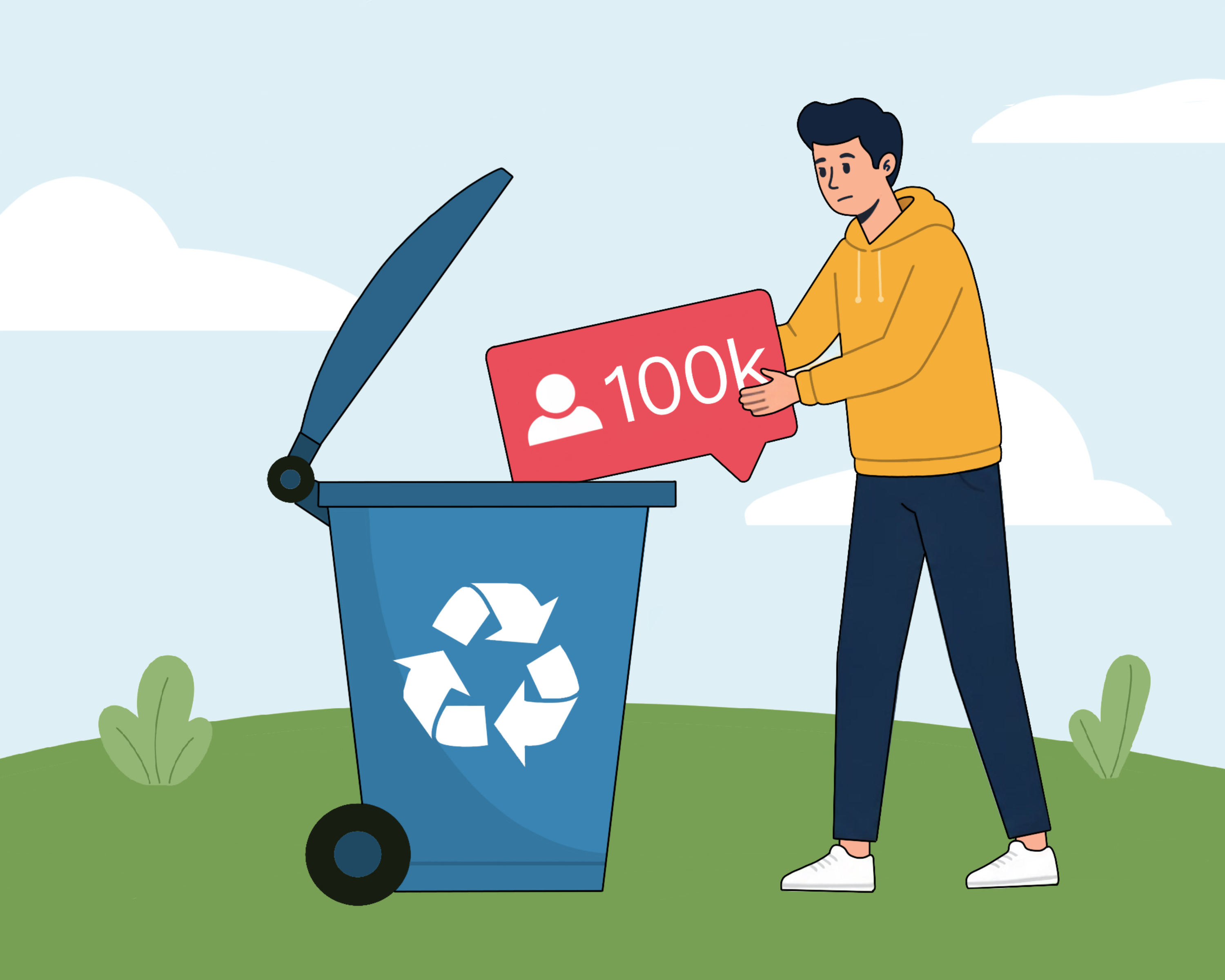
Clickbait vs. Strategy: What Actually Grows a Channel
 Let’s be honest. Have you ever clicked on a video just because the thumbnail looked too provocative?
Probably.
And then felt disappointed when it turned out to be nothing like what was promised?
Safe to say—it’s happened to everyone.
The paradox is that many creators still believe a flashy thumbnail and a loud headline automatically guarantee success.
This myth is very much alive among YouTubers, but it has an unpleasant downside. When a channel relies too heavily on clickbait, the audience starts to lose trust. And without trust, as you know, you can’t build anything long-term.
Let’s break down how to avoid this—and why virality isn’t the only path to growth.
The thumbnail and title work as a single system
Let’s start with an honest truth: endless clickbait thumbnails filled with ubiquitous arrows and empty phrases will only help you undermine your audience’s trust.
That’s not something we can afford.
The main goal of a thumbnail is to catch the viewer’s eye while they’re scrolling. And yes, bold and shameless clickbait definitely gets the job done. But grabbing attention doesn’t have to rely on loud promises your video won’t deliver on.
There are other, more sustainable approaches:
- a bold statement
- a direct hit on the viewer’s pain point
- intriguing absurdity
- aesthetically pleasing “speaking” fram
The whole story of packaging goes much deeper: thumbnails and video titles don’t work separately, because their shared goal is to make the viewer want to click.
In the examples above, you probably noticed how thumbnails and titles together form a single narrative and complement each other.
📌 If the thumbnail grabs attention, the title should open the topic and give the viewer a clear promise of what they’ll get from the video.
Promised a simple 15-minute recipe made from everyday ingredients? Then the dish should actually be exactly that. Not like that meme version of “just add salt and pepper.”
As they say, it’s not the clickbait itself that’s scary — it’s failing to deliver on it.
And this is where the fine line lies between a useful tool and the loss of trust.
Viewers will forgive a bold thumbnail if the content inside is genuinely valuable. But if the deception repeats over and over, the channel starts to feel empty.
And if your channel turns into one long meme, sooner or later the audience gets tired, and it ends up like the boy who cried wolf — no one believes you anymore.
Virality vs Depth
The second important point is that not every video needs to go viral.
This is a fairly broad topic, but the core idea is simple: viral videos—especially if you run an educational channel—are just one type of content you need.
And while it’s extremely difficult to build a strong fan base on hype-driven topics alone, you shouldn’t avoid them entirely either.
To create a viral video, you need to target the widest possible audience of beginners. And there are far more of them on YouTube than there are experts in any given field.
That’s why most creators will inevitably need to speak to that audience.
For example, in the niche of YouTube growth, viral videos would be things like “How to get your first subscribers” or “How to set up your camera.”
These videos don’t require deep dives—they are broad, simple, but still interesting and useful.
Viral content is meant to bring in new audiences who just want to understand how YouTube works in general.
And this applies to any niche, unless you are deliberately targeting only professionals.
If you fill an average channel only with hype-driven topics, you won’t be able to retain all the incoming audience.
Beginners grow, evolve, and eventually become professionals who need more specific, niche, and advanced topics.
To avoid burning yourself out by constantly chasing new viewers just to keep the channel alive, you need to prioritize the interests of those who are already watching you.
That type of content should make up the majority of your channel.
Viral videos, on the other hand, are a supporting tool used to grow and expand your audience.
Everything needs balance. And if there’s nothing substantial behind the growth, viral videos alone won’t save the channel.
In other words, virality is not the foundation—it’s a lever. It only works if there’s something to pull: a strong base, a loyal core audience, and a system where viewers can stay for a long time.
This is a complex topic, and not every example will apply universally, because every channel and goal is different.
But the idea that not every video needs to be viral applies to everyone.
Real channel stability is built not on a single hit, but on a system: thumbnails and titles working together, viral videos bringing in newcomers, and expert content retaining the core audience.
And all of it comes down to one key principle:
📌 Every video you make should lead to another one of your videos being watched.
Because a successful channel is not a million views on a single video. It’s tens and hundreds of thousands of views flowing from one video to the next, reinforcing interest and turning casual viewers into loyal ones.
💜 That’s how you build not hype—but long-term, sustainable growth.