Unlock Your YouTube Channel's Full Audience Potential
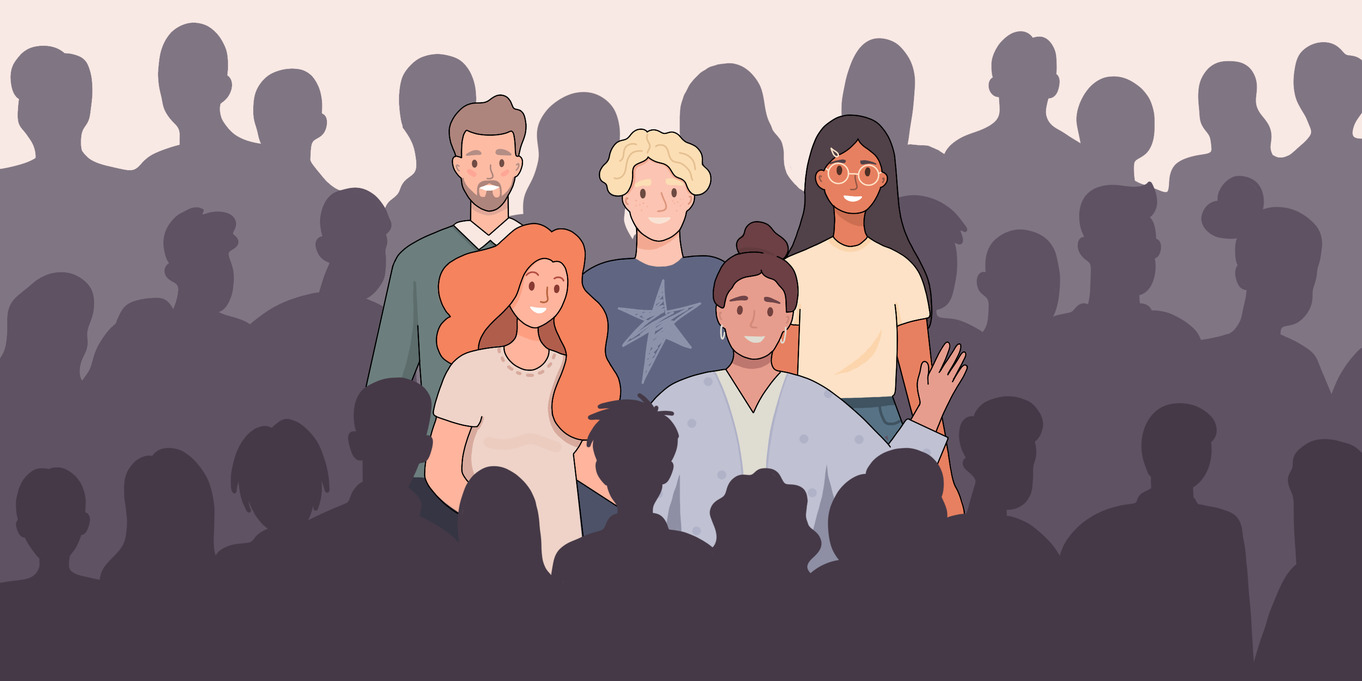
You can spend as much time as you want learning about storytelling, creating clickable thumbnails, writing compelling titles, and mastering all the other nuances of YouTube. But if you skip the step of understanding your viewers, your progress will be slow.
And you don't necessarily need to create an incredibly detailed audience profile, to the point where you feel like you could practically shake hands with your typical viewer.
A basic understanding of what you need to know about your audience today to create successful content is enough.
Very often, we encounter situations where creators mistakenly believe they've already reached the limits of their potential audience.
They think, "There's no way my channel can get more than 200–300 views because I've already tried everything."
In most cases, these "limits" exist only in their minds. Virtually any topic can become popular if it's presented the right way.
On the other hand, if your goal isn't to reach a massive audience and you're perfectly happy attracting a narrow target audience to sell products or services, then you don't necessarily need to worry about expanding your reach.
But then again, when has reaching more viewers ever really hurt anyone?
So, if you believe your audience is limited to a tiny fraction of YouTube's millions of viewers, the truth is that you simply haven't unlocked your true audience potential.
Let's change that.
You're Not Taking Your Audience's Age Into Account
If you look at YouTube's demographic analytics without analyzing who these people actually are, the numbers will remain just numbers.
Content on the exact same topic can look completely different depending on the age of your audience.
To make things easier, let's divide our viewers into groups based on generational theory.
-
Baby Boomers (1946–1964)
Today's grandparents also use the internet and enjoy its benefits, although not as actively as younger viewers.
✅ Due to their age and the environment they grew up in, they tend to value a calm presentation style, reliable information, and a personal, human touch in content.
❌ They generally dislike abrupt transitions, slang, and visuals that change too quickly.
They often prefer videos in the form of lectures, interviews, and talking-head presentations with clear explanations.
It's important to keep camera shots steady and relatively static, use large text, and choose simple, easy-to-read fonts. For this audience, high production quality and fancy editing aren't nearly as important as the person on camera, their presentation style, and the information itself.
You can already start to see a pretty clear picture of who's likely to watch this type of content and what you should keep in mind when creating it, right?
Let's keep going.
- Gen X (1965 — 1980)
These are people who are more familiar with technology, which means their expectations for content are growing, and their definition of quality is evolving.
✅ This generation prefers well-structured content, enjoys diving into analysis, and doesn't mind a joke or two — especially when it comes to more mature, adult humor.
❌ Interestingly enough, they don't like "dumb" content. But it's important to understand that their idea of "dumb" often includes popular memes and viral trends. Gen X has its own cultural icons, after all.
They aren't particularly drawn to nostalgia, generally dislike childish behavior, and tend to be skeptical of psychologists.
Overall, they value realism and clear structure.
They enjoy all kinds of analytical content (educational videos, in-depth analyses, reviews, and documentaries). The key is to keep everything well-organized and clearly structured.
- Millenials (1981 — 1996)
The first internet generation and the pioneers of mobile technology.
These are people who have already experienced a huge variety of video formats and topics, having grown up alongside the evolution of television, cinema, and YouTube.
✅ Millennials are pretty hard to impress, which is why they value authenticity, humor, and emotional engagement.
❌ They can't stand anything fake or insincere, pushy sales tactics (because they've already figured out how those work), or content that's "too superficial."
Millennials are probably the most demanding age group when it comes to content quality (filming and editing). That's largely because they've witnessed technology at different stages of its development and know both how things used to be and what's possible today.
Their expectations for presentation are equally high: they want authenticity and a dynamic pace, but also moments to pause and reflect.
They're open to pretty much any content format, as long as it's interesting.
- Gen Z (1997 — 2012)
On the plus side, Gen Z has fairly moderate expectations when it comes to video production quality. They grew up with advanced technology already at their fingertips, so they don't feel the same need for constant improvements (unlike Millennials, who seem to be on an endless quest for something better).
✅ Gen Z loves fast-paced, engaging content, irony and post-irony, self-awareness, and boldness.
❌ Having spent practically their entire lives online, their attention spans are like those of goldfish: three seconds, and they've already scrolled on to the next video.
Naturally, this generation (especially younger Gen Z viewers) prefers short-form vertical videos, challenges, and bright, eye-catching visuals with bold, saturated colors. For them, a creator's authenticity often takes a back seat.
But here's the bottom line: all of these descriptions are fairly broad generalizations.
Still, they can help you better understand who's watching your videos, what formats and topics they prefer, and even what kind of presentation style resonates with them.
You're Losing Your Uniqueness by Trying to Please Everyone
It may have seemed like uniqueness only matters to Millennials, but in reality, it's something every generation values. The difference is simply in the types of personalities and characters they connect with.
That's why your identity is your strength.
Instead of toning down what makes you unique (your language, humor, or local cultural references) to appeal to some imaginary "everyone on the platform," you should make those qualities part of your storytelling.
❌ There's a common myth that reaching a wider audience means making your content more generic.
But without your unique touch, your videos risk becoming just another collection of repetitive, generic content, blending in with countless other creators. And ultimately, you'll lose out to those who aren't afraid to stand out.
Remember what we said earlier about how most limits exist only in your mind?
Many topics that initially seem too niche can actually appeal to a much broader audience. And that's precisely because a creator's uniqueness doesn't hold the content back — it becomes their signature quality, attracting viewers who might never have been interested in the topic otherwise.
Here are some examples of highly successful channels that focus on very niche topics:
-
A channel about ponds and fish farming with 1 million subscribers.
-
A channel offering lawn care tips.
Who would have thought that such niche topics could attract huge numbers of views? Yet they do.
It all comes down to how you present your content and who you're creating it for.
The key is that even if viewers aren't part of your niche, they should still be able to connect with the emotions behind your content.
The more confidently you express what makes you unique, the easier it becomes for a wider audience to connect with you.
To figure out whether you're truly letting your uniqueness shine through, ask yourself these questions:
- Will people who aren't familiar with my niche understand what the video is about?
- Will viewers who aren't familiar with the topic be able to feel the same emotions I do?
- Am I providing enough context in my videos (captions, on-screen tips, cutaway shots)?
That's the difference between niche content and niche content with broader audience potential.
You're Making Your Video Topic Sound Boring
Sometimes, the problem isn't your idea — it's how you present it.
Let's say you're making a video about a small American town like Roswell, New Mexico, and you give it a title like "The History of Roswell, New Mexico."
Sounds like a high school history project, right? And chances are, it'll only attract people who live there or have some personal connection to the town.
Now compare that with these titles:
-
"The Small American Town That Became the UFO Capital of the World"
-
"Why Do People Believe Aliens Crashed in This New Mexico Town?"
-
"I Spent a Week in America's Most Famous UFO Town — Here's What Surprised Me"
See the difference?
You're covering the exact same topic, but instead of simply saying, "Here are some interesting historical facts," you're turning it into a story built around curiosity, emotion, or an unexpected twist.
And the best part? You're not changing your topic or abandoning your niche. You're simply giving people who would normally scroll right past it a reason to click and watch.
Ask yourself this:
What emotion or personal interest can I tap into for someone who doesn't initially care about this topic? What would make it meaningful to them, not just to me?
Or, to put it more simply:
How can I make someone interested in a topic they wouldn't normally care about?
Or, even simpler:
Why should someone who doesn't know me care about my video?
We think that makes it pretty clear.
You're Not Considering How People Watch Your Videos
For some reason, most creators are convinced that their viewers watch their videos just as closely as they do when editing or reviewing the final cut.
But what actually happens?
-
Someone has your video playing in the background while cooking dinner.
-
Someone is watching on mute because they're sneaking a peek at their phone during class.
-
Someone falls asleep with their phone in hand while your video is still playing.
Viewing habits are partly influenced by age (as we discussed earlier) and partly by people's everyday lifestyles.
But there's no need to guess. YouTube Analytics gives you valuable insights into HOW people watch your content.
For example, if most of your viewers are watching on mobile devices, you should make sure your editor uses larger on-screen text and zooms in on small details during screen recordings.
YouTube tracks devices and viewing behavior, and if your content isn't optimized for how people watch, you're putting yourself at a disadvantage.
In fact, viewing behavior can influence recommendations so much that someone might see one set of suggested videos in the morning and a completely different selection in the evening. Recommendations can also vary depending on whether they're watching on a phone or a computer.
How to adapt your content to different viewing habits:
-
Break your videos into clear chapters and include natural pauses between sections. (And don't forget to add timestamps!)
-
Reinforce important points with on-screen text, and summarize the key takeaways at the end of each chapter or video.
-
Start your videos with a clear (but brief) explanation of what viewers can expect.
-
Always remember that your viewers have limited attention spans, and many are only half-watching while doing something else.
One last important point:
You're Not Giving Viewers a Reason to Come Back
It's one thing to grab someone's attention with a single video. It's another thing entirely to give them a reason to come back again and again.
YouTube Analytics has a very important metric that shows how many of your viewers are new viewers versus returning viewers.
And that distinction matters.
Returning viewers are people who have watched your channel before and decided to come back for more.
As a creator, your job is to figure out which videos and topics keep bringing people back and which ones primarily attract new viewers.
Because the more consistently viewers return to your channel:
-
The more opportunities your videos have to gain traction through YouTube's recommendations, as returning viewers can provide an early source of engagement and watch time.
-
The more your audience starts turning into a community — a loyal group of people who genuinely connect with your content and want to follow what you do next.
-
The stronger your foundation becomes for sustainable channel growth.
That's what real growth looks like: not just reaching more people, but building a channel that consistently attracts viewers.
Let's Recap
-
Think about not just who you are, but who you're creating content for.
-
Pay attention to how people actually watch your videos.
-
Present your topics in a way that even someone completely unfamiliar with your niche can find interesting.
-
And don't be afraid to be yourself. Your unique identity is one of your biggest competitive advantages when it comes to attracting viewers.
Once you've got all that figured out, the next step is storytelling.
But that's a topic for another day.